Thorin Oakenshield
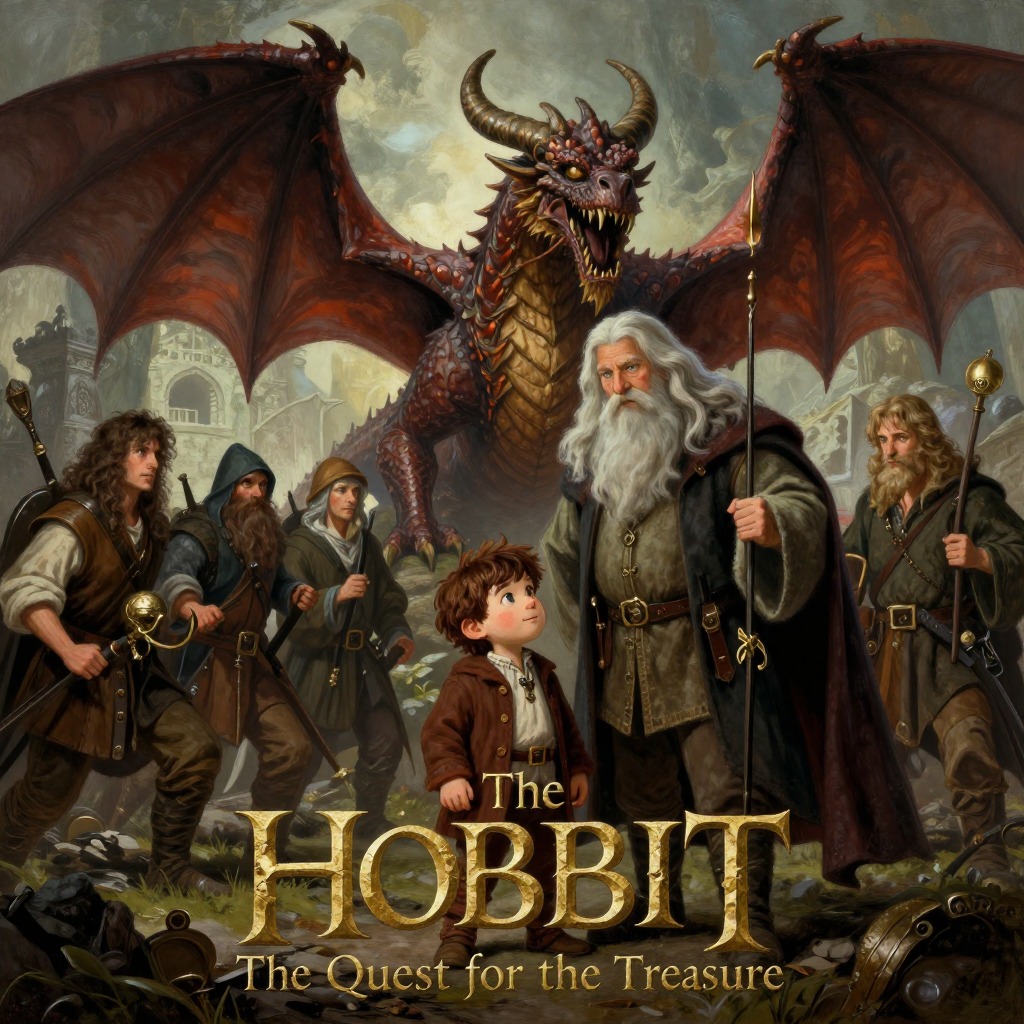
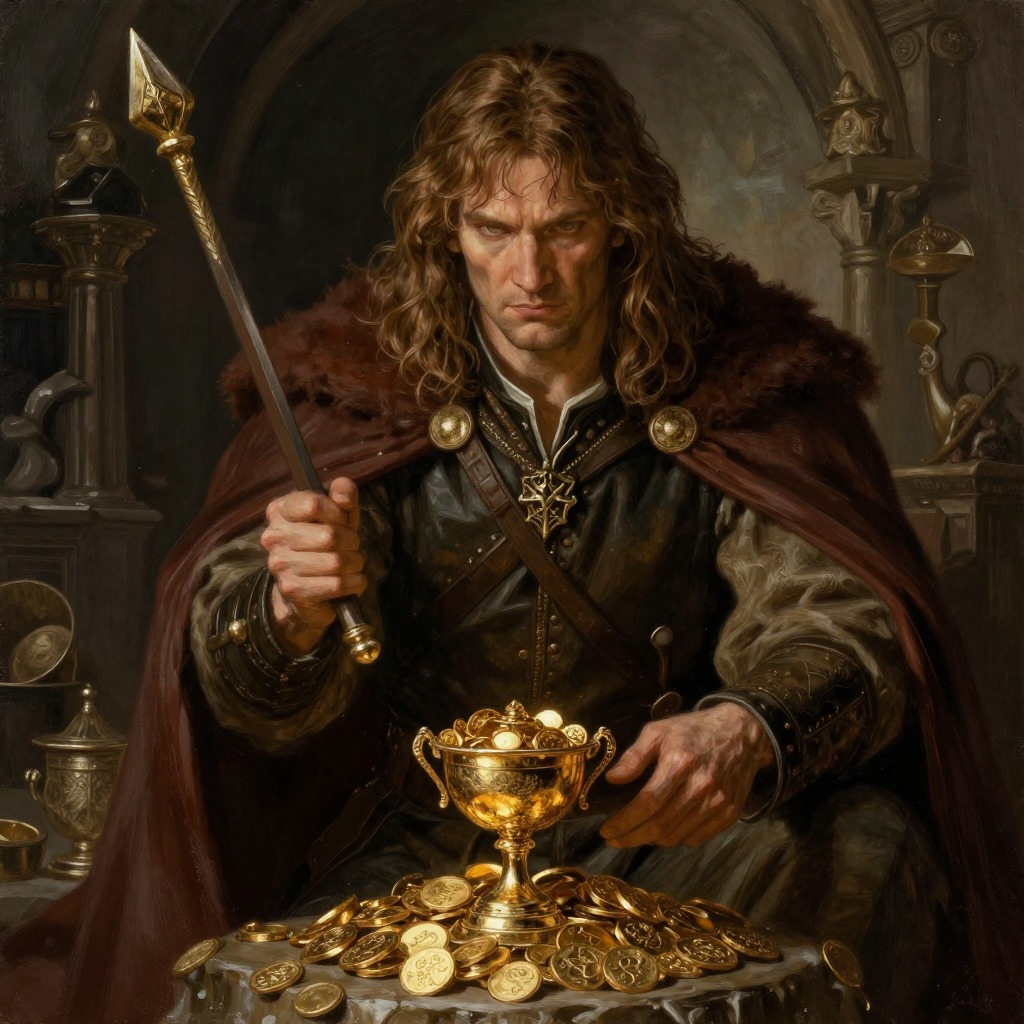
Thorin Oakenshield, the proud and exiled heir of the ancient line of Durin, is the driving force behind the quest to reclaim the lost dwarven kingdom under the Lonely Mountain. As the grandson of Thror, the last King under the Mountain, and the son of Thrain, Thorin carries the weight of a dispossessed dynasty. His leadership of the company of thirteen dwarves, with the hobbit Bilbo Baggins as their hired burglar, forms the central spine of the adventure, a journey that transforms him from a haughty exile into a tragic king who ultimately sacrifices his life for his people.
Identity and Background
Thorin is introduced as "an enormously important dwarf, in fact no other than the great Thorin Oakenshield himself," a figure of immense pride and lineage. He is the heir of the royal line of Durin, the eldest race of Dwarves, and his family was driven from their home in the Lonely Mountain by the dragon Smaug. The dragon's attack, which Thorin witnessed as a "fine adventurous lad," destroyed the prosperous town of Dale and scattered the dwarves, forcing them into lives of exile and labor, often as blacksmiths or coal miners. This history of loss and dispossession fuels Thorin's burning desire for revenge and the recovery of his people's treasure, a goal that defines his every action. He carries the key to the secret door of the Mountain on a chain around his neck, a symbol of his claim and his hope.
Arc Through the Plot
Thorin's journey is marked by a steady hardening of his resolve and a growing obsession with the treasure. Initially, he is a commanding but not unreasonable leader, accepting Gandalf's choice of Bilbo as the fourteenth member of the company. As the quest progresses through the Misty Mountains, Mirkwood, and the hospitality of Beorn, Thorin's authority is tested, but he remains focused on the goal. The turning point comes with the death of Smaug and the discovery of the unguarded hoard. The "lust of it was heavy on him," and he becomes increasingly grim and uncompromising, refusing to share any of the treasure with the men of Lake-town or the Elves, even when their claims are just. This culminates in his declaration of a siege, his violent rejection of Bard's parley, and his furious denunciation of Bilbo as a "descendant of rats" when the hobbit gives the Arkenstone to the besiegers.
Relationships and Conflict
Thorin's relationships are defined by his pride and his role as king. He is the leader of his company, commanding respect and loyalty from his fellow dwarves, particularly his nephews Fili and Kili, who die defending him. His relationship with Bilbo is complex, beginning with condescension and evolving into grudging respect, before collapsing into bitter betrayal over the Arkenstone. Thorin's primary conflict is with the dragon Smaug, the source of his people's ruin, but after Smaug's death, his conflict shifts to the human and elven armies who seek a share of the treasure. He sees their claims as theft and refuses to negotiate under threat, a stance that nearly leads to a disastrous battle. His final, most profound conflict is internal, as the "dragon-sickness"—the corrupting lust for gold—warps his judgment and alienates him from his allies.
Change and Ending
Thorin's arc reaches its climax in the Battle of Five Armies. He leads a desperate sortie from the Mountain, wielding his axe with mighty strokes and rallying his kin with a cry that "shook like a horn in the valley." He drives against the bodyguard of Bolg, but is overwhelmed and falls, pierced with many spears. In his final moments, lying wounded, Thorin undergoes a profound change. He bids farewell to Bilbo, taking back his harsh words and deeds at the Gate. He acknowledges the hobbit's worth, saying, "There is more in you of good than you know... If more of us valued food and cheer and song above hoarded gold, it would be a merrier world." He dies in peace, having reconciled with his friend and recognized the folly of his greed. He is buried deep beneath the Mountain with the Arkenstone upon his breast and the elvish sword Orcrist laid upon his tomb, a king restored to his hall in death.
Narrative Role and Evaluation
Thorin Oakenshield is the tragic hero of The Hobbit, a figure whose noble lineage and just cause are corrupted by the very treasure he seeks to reclaim. His story serves as a cautionary tale about the destructive power of greed, the "dragon-sickness" that can afflict even the most honorable. His death is a necessary sacrifice that allows for a new peace between dwarves, men, and elves. While Bilbo is the protagonist whose perspective guides the narrative, Thorin is the engine of the plot, the king whose return sets the entire adventure in motion. His final redemption, acknowledging the value of simple joys over hoarded gold, provides the story with its most poignant moral lesson, cementing his place as a memorable and complex character in Tolkien's legendarium.